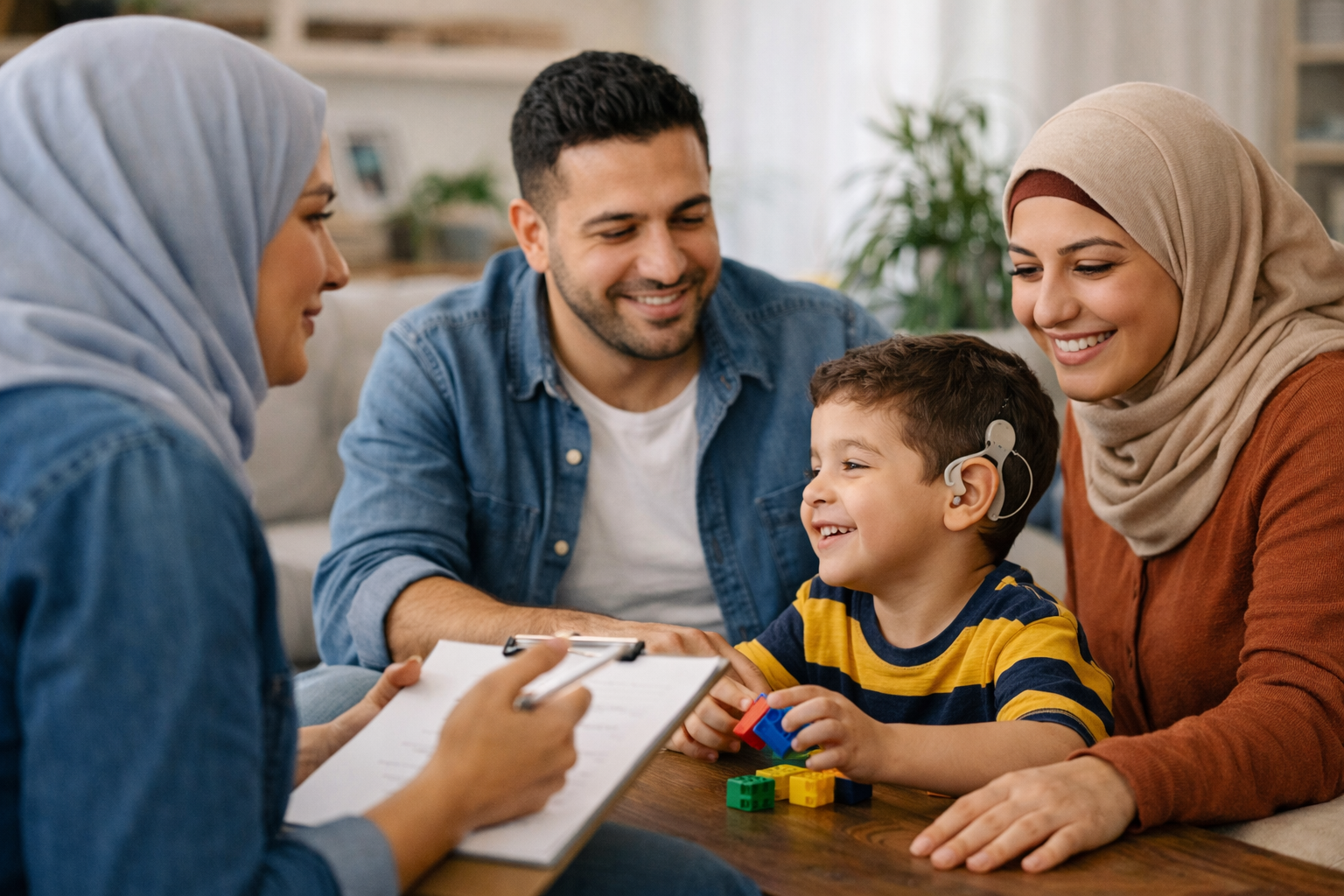
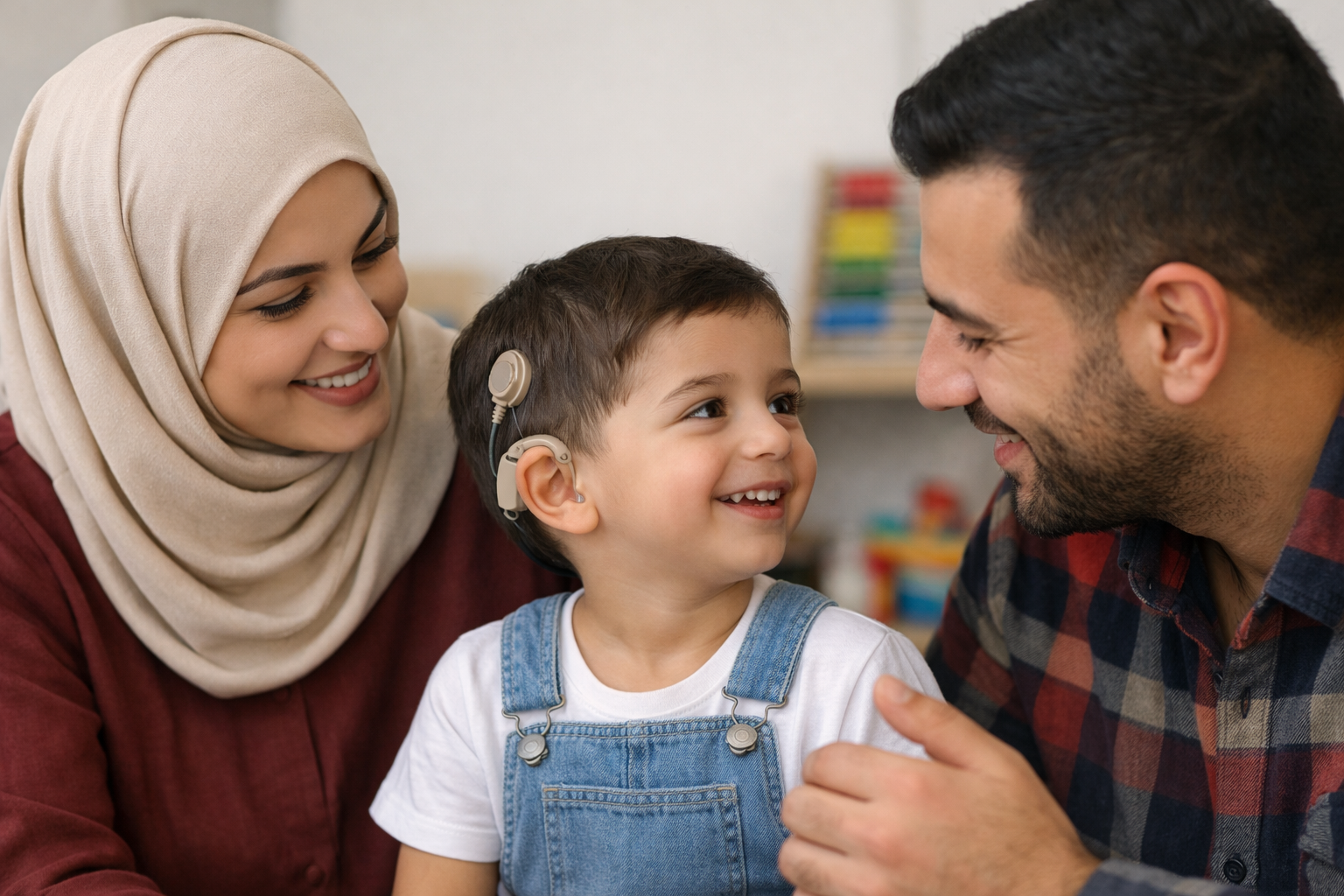
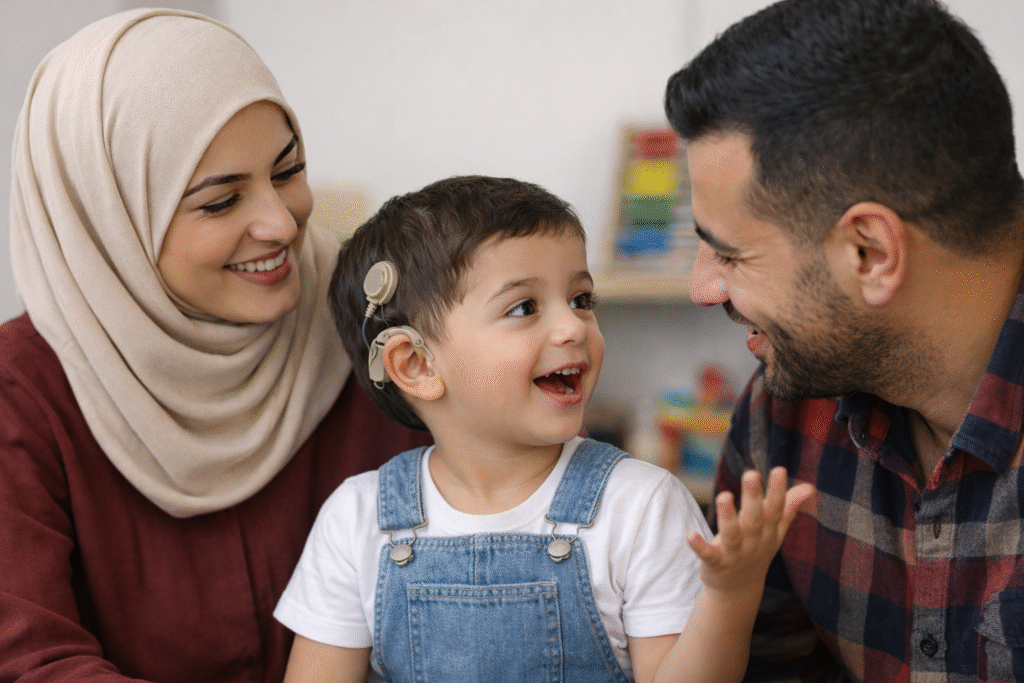
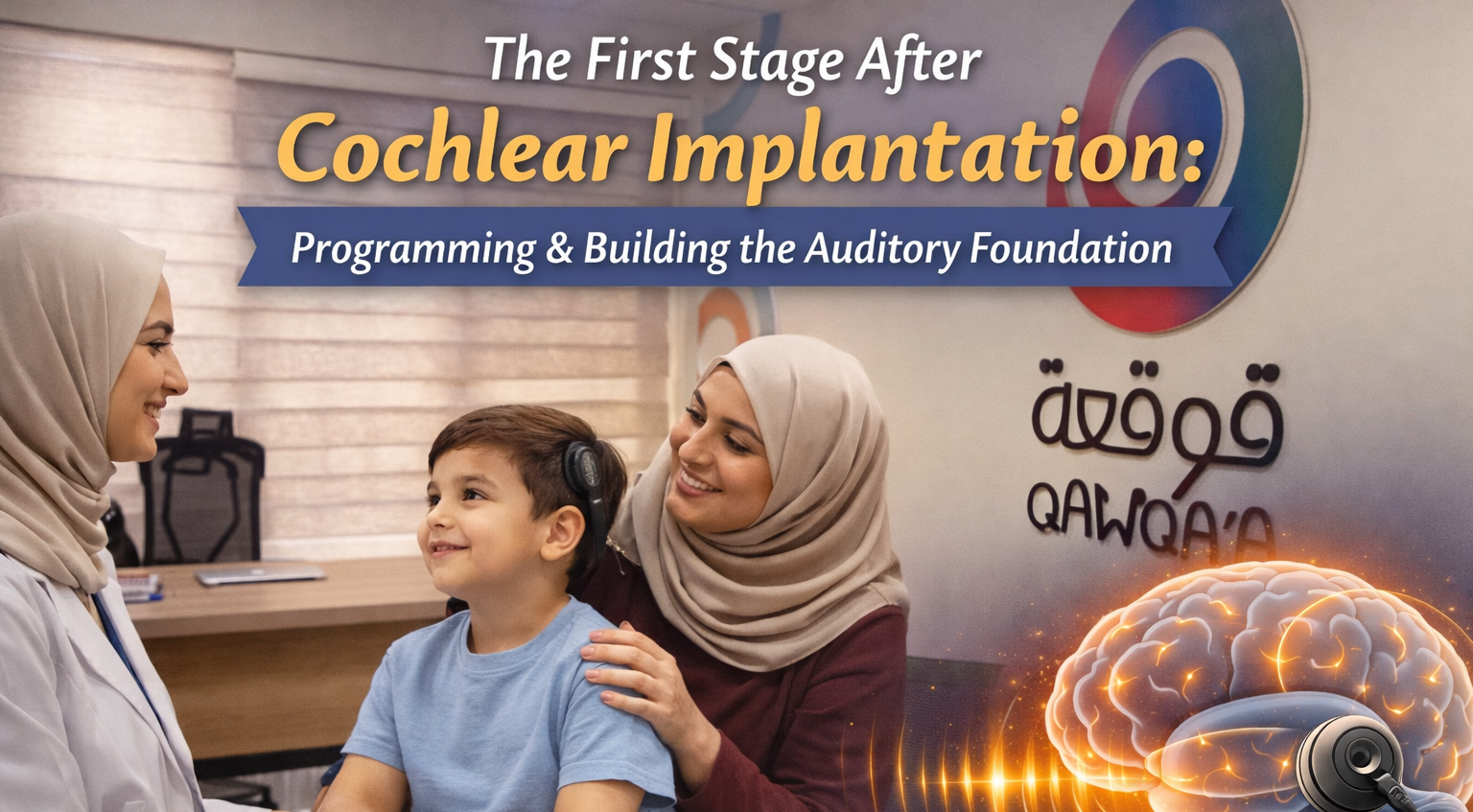
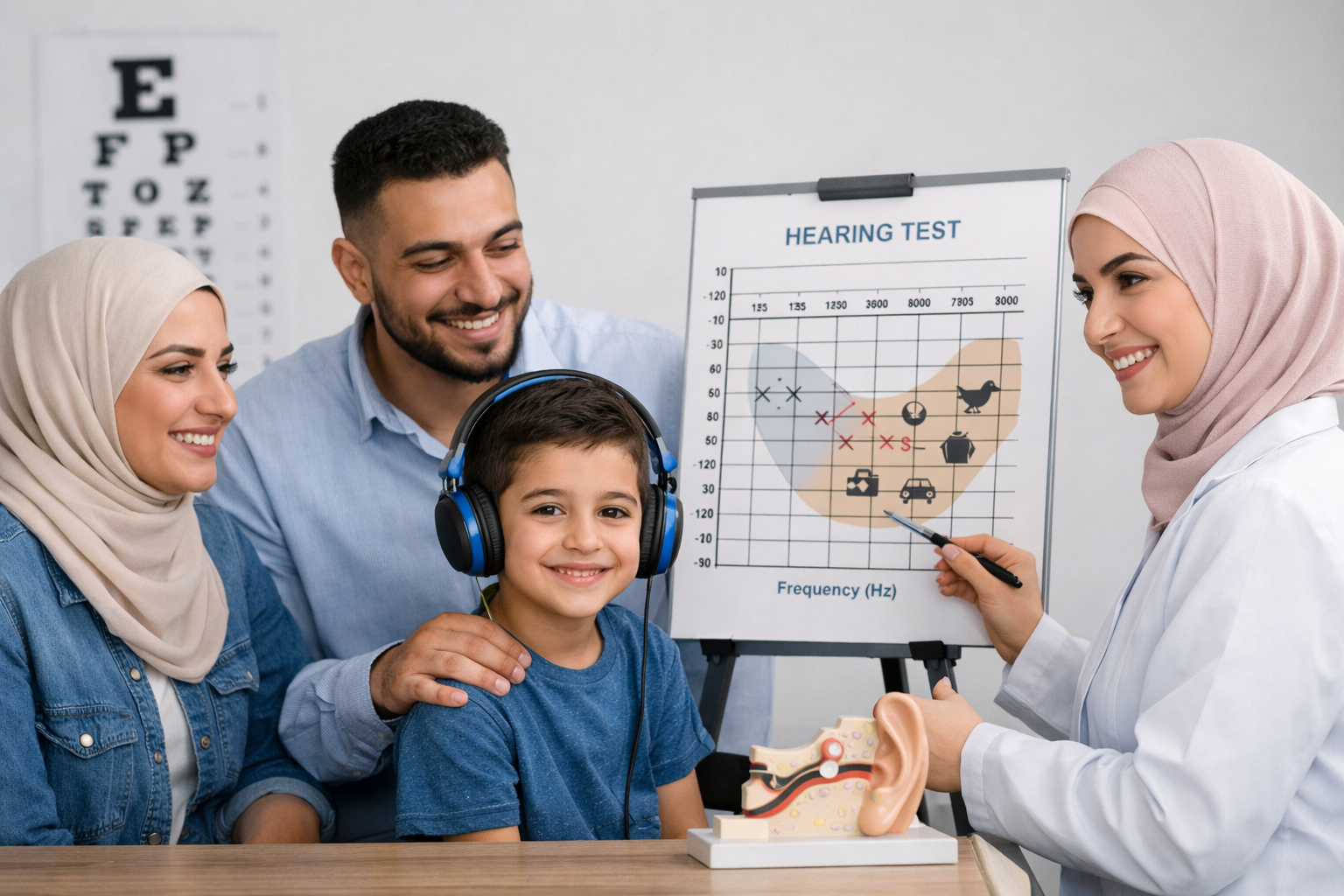
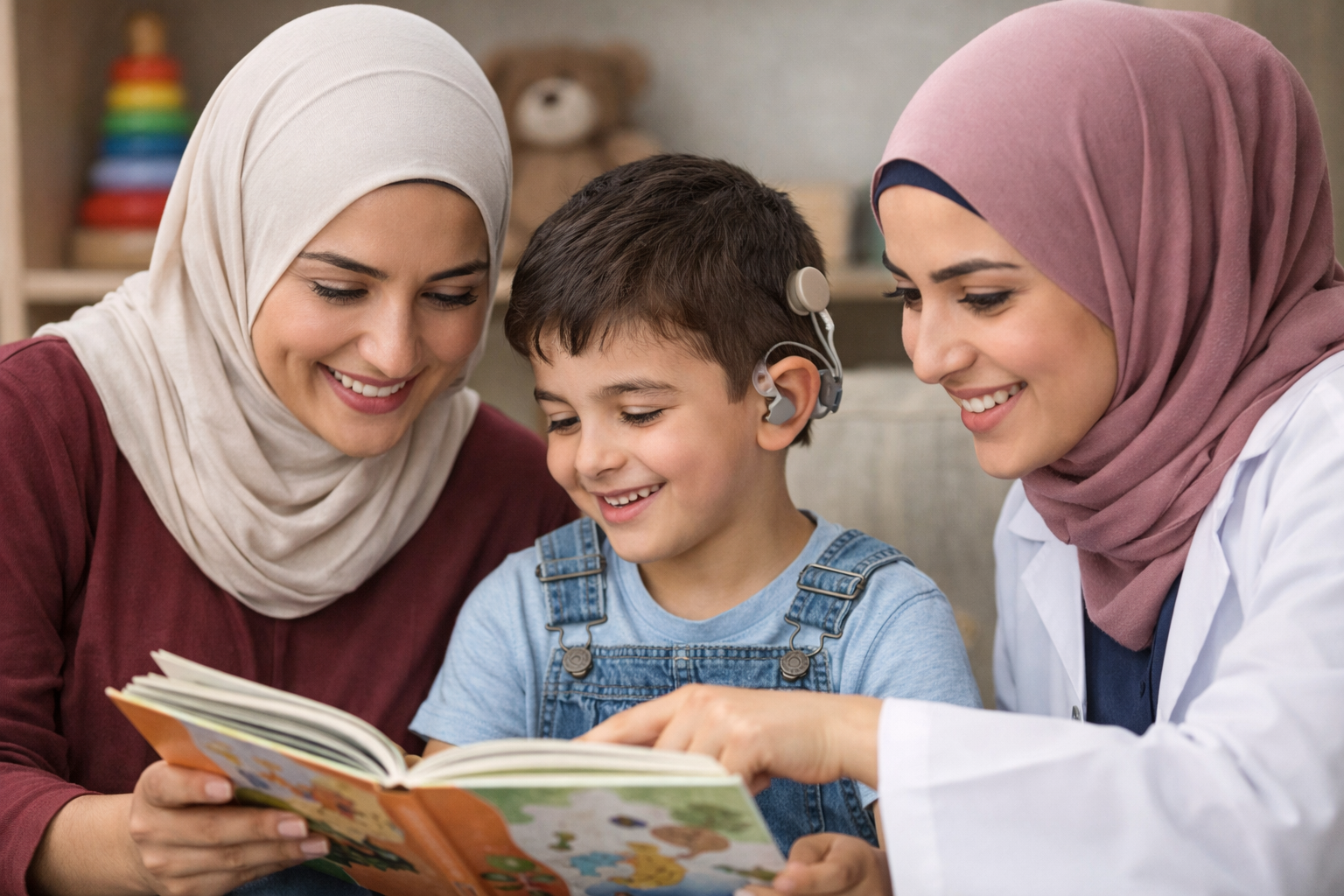
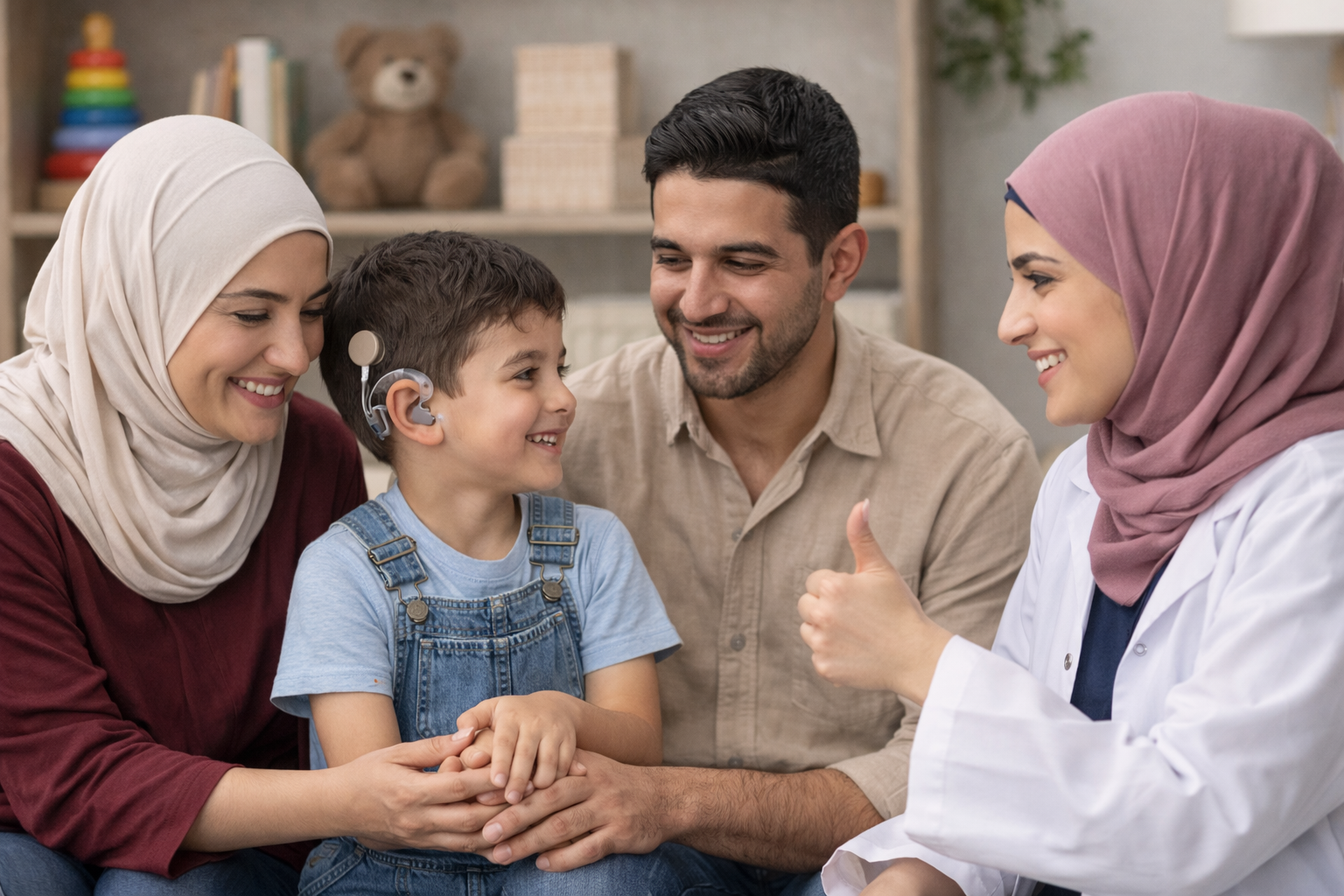
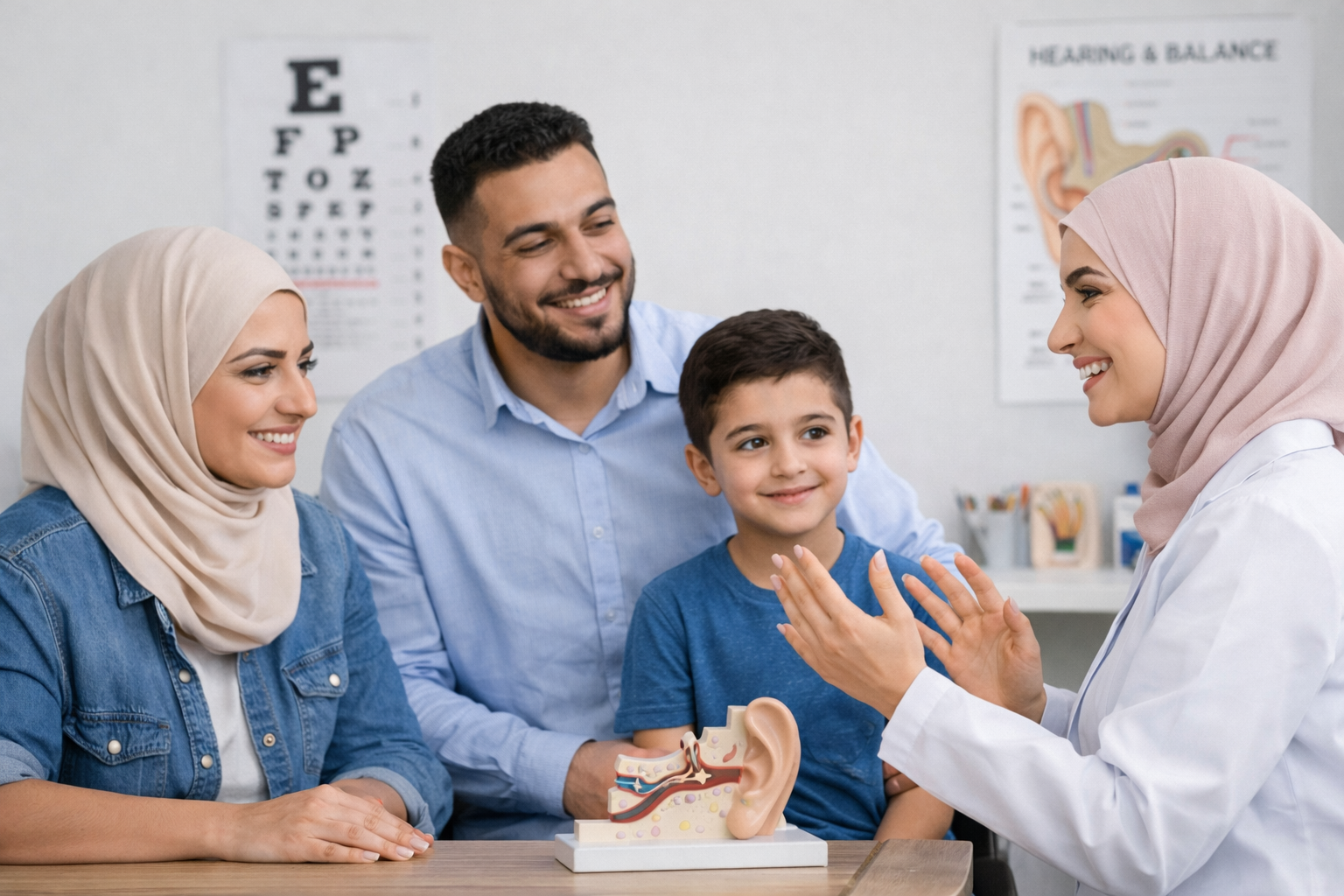
Many parents of children with hearing loss ask an important and emotional question:
Will my child speak after cochlear implantation?
Due to the variation in outcomes after cochlear implantation, parents often experience fear,
doubt, and anxiety about their child’s future. This uncertainty may negatively affect family life
and decision-making.
The journey of searching for clear answers can be long and exhausting. The purpose of this
two-part article is to clarify this complex question and to serve as a realistic guide for parents
and professionals when setting expectations after cochlear implantation.
The cochlear implant is considered one of the most remarkable technological achievements in
modern medicine. It has enabled thousands of children and adults to regain access to sound,
develop listening skills, communicate effectively, and achieve academic and social success.
The main goal of cochlear implantation in children is to enable the child to acquire age-appropriate
spoken language, allowing independence in school and daily life. Achieving this goal requires
several critical factors to work together. Ignoring any of these factors may significantly affect
the final outcome.
This process is similar to building a strong structure: each essential material is required.
In the same way, successful outcomes after cochlear implantation depend on multiple interacting
elements. This article discusses the most influential factors, starting with age at implantation,
degree of hearing loss, and quality of cochlear implant programming.
Age at Implantation
One of the most important factors influencing spoken language development is
the age at which cochlear implantation is performed. Scientific evidence strongly supports
early intervention after the diagnosis of hearing loss.
The younger the child at the time of implantation, the better the outcomes tend to be.
The brain develops structurally and functionally based on the sensory input it receives.
When auditory input is absent, the brain reorganizes itself accordingly.
Studies show that children implanted around one year of age have a higher chance of achieving
age-appropriate language by the age of six compared to children implanted at two years of age.
Additionally, children implanted earlier tend to face fewer academic challenges later in life.
Some countries now recommend cochlear implantation before the age of one.
Others use body weight rather than age as a criterion. However, age alone does not guarantee
success and must be supported by additional factors.
Degree of Hearing Loss
In recent years, cochlear implant candidacy criteria have expanded to include children with
significant residual hearing who do not benefit adequately from hearing aids.
Previously, cochlear implants were limited to children with profound hearing loss
(above 90 dB). Today, children with severe hearing loss (above 70 dB) may qualify if hearing
aids do not support proper language development.
Research indicates that children with better residual hearing often achieve
faster and stronger outcomes after cochlear implantation.
Modern clinical guidelines emphasize speech discrimination ability with hearing aids.
If a child achieves 60% or less speech recognition while using hearing aids, they are considered
a strong candidate for cochlear implantation.
Quality of Cochlear Implant Programming
Cochlear implantation does not end with surgery. A critical phase begins shortly after,
known as device activation and programming.
During programming, sound is gradually introduced to the brain. The audiologist controls
sound loudness, clarity, and frequency balance. Proper programming is essential for accurate
speech perception.
Leading experts agree that optimal programming should be achieved
within one month of activation. The goal is to reach aided hearing thresholds between
20–30 dB across all speech frequencies.
Delayed or poor programming can lead to long-term speech and language difficulties.
Experts emphasize that high-quality pediatric programming is an
ethical and professional responsibility.
In this section, we explore additional elements that are equally important for successful
spoken language development.
Rich Language Exposure
Once the child achieves optimal hearing access, they require
intensive and meaningful exposure to spoken language.
Language develops through daily interaction, repetition, and emotional engagement.
Parents are encouraged to talk continuously with their child, describe daily activities,
and maintain open conversations. Every routine activity represents an opportunity for
language learning.
Early stages may be challenging, and progress may seem slow.
This is where professional guidance and parental support become essential.
Daily Use of the Cochlear Implant
Consistent device use is critical. Research shows that children who wear their cochlear implant
10 hours or more per day demonstrate significant language progress.
Children who use their device less than six hours per day often show minimal improvement.
Full-day use ensures balanced auditory and visual brain development.
If a child refuses to wear the device, the most common reason is
inadequate programming or sound discomfort, not resistance to hearing itself.
Presence of Additional Medical Conditions
Outcomes after cochlear implantation cannot be predicted without considering the child’s
overall health. Approximately 40% of children with hearing loss have additional
medical or developmental conditions.
These may include inner ear abnormalities, neurological conditions, genetic syndromes,
or motor and cognitive challenges, all of which can affect auditory processing and language
development.
Children with complex medical needs require individualized intervention plans and
realistic expectations.
Final Conclusion
Yes, many children do develop spoken language after cochlear implantation.
However, success depends on multiple interconnected factors, not surgery alone.
Early implantation, accurate programming, full-day device use, rich language exposure,
family involvement, and overall health all play vital roles in determining outcomes.
With proper support and evidence-based intervention, cochlear implantation can become
a life-changing pathway toward communication, independence, and inclusion.