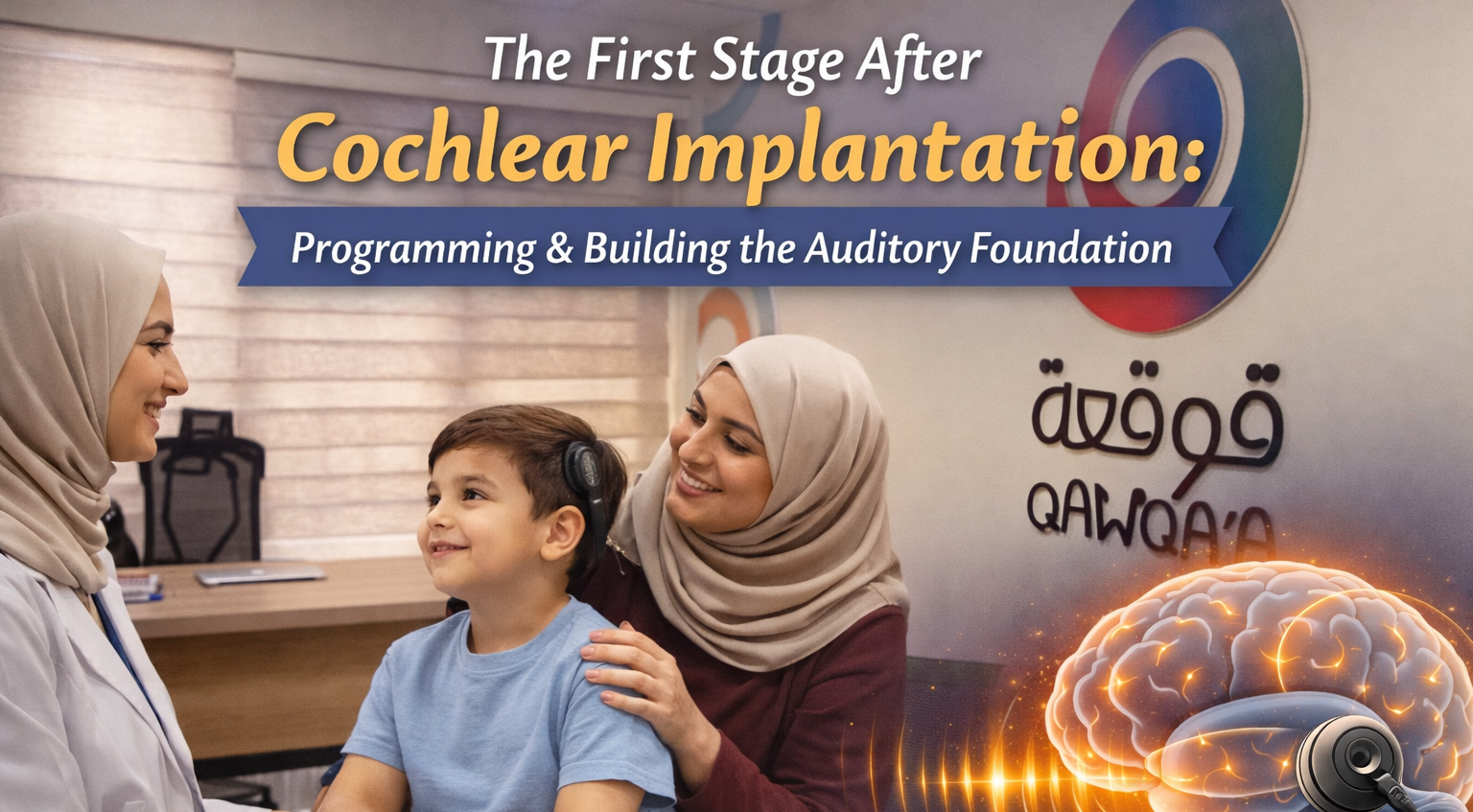
The First Stage After Cochlear Implantation: Programming and Building the Auditory Foundation
After cochlear implant surgery, a new and critical chapter begins in the child’s auditory journey. This stage is just as important as the surgery itself, as the long-term success of the cochlear implant depends heavily on what follows.
This phase is known as the programming (mapping) stage, and it represents the first step after the device is activated. It may last several weeks, and sometimes longer, depending on the child’s individual condition and auditory response.
During this stage, expectations must be realistic and guided by scientific evidence rather than urgency or comparison.
What Is the Goal of the Programming Stage?
At this stage, the goal is not speech, language, or clear understanding of sounds.
The primary objective is to build a safe, comfortable, and gradual auditory foundation that allows the child’s brain to adapt to sound signals it has never processed before, or has not processed for a long time.
Sound perception after cochlear implantation is a neurological learning process. The brain needs time to recognize, tolerate, and organize these new electrical signals before they can be meaningfully interpreted.
What Happens During Cochlear Implant Programming?
Programming is a precise clinical process carried out by an audiologist. It involves adjusting the sound intensity delivered by each individual electrode inside the cochlea.
The goal is to ensure that sounds are audible, comfortable, and non-threatening for the child.
In the early sessions, sound levels are intentionally kept very low. Some parents may feel that their child is “not hearing,” but in reality, the brain has begun its first steps toward auditory development.
This gradual approach is essential. Rapid increases in sound levels or skipping this phase can lead to negative outcomes such as discomfort, sound aversion, or refusal to wear the device.
Why Is Gradual Programming So Important?
The auditory nervous system does not adapt suddenly. Scientific research strongly supports slow and carefully monitored programming, especially during the first weeks after activation.
Pushing sound levels too quickly can overwhelm the brain and create negative auditory experiences, which may affect the child’s long-term relationship with sound.
For this reason, close follow-up sessions during the initial weeks are strongly recommended.
Typical Behaviors During This Stage
During the programming phase, children may show subtle but meaningful auditory responses.
These may include turning toward sounds, pausing suddenly, changes in facial expression, or stopping movement when a new sound is heard.
Such behaviors are positive auditory indicators, even if the child does not yet understand words or respond verbally.
At this stage, understanding daily language or familiar phrases is not expected, and this is completely normal.
The Role of Parents and Caregivers
The role of parents during this stage is critical.
The most important factor for success is consistent use of the cochlear implant during all waking hours, even when progress appears limited.
Every hour of auditory exposure helps build neural pathways in the brain. Hearing development does not function as an on-and-off switch, but rather as a cumulative process that grows with daily exposure.
Parents are encouraged to speak naturally with their child during daily routines such as play, meals, bathing, and outdoor activities.
There is no need to raise the voice, exaggerate speech, or test the child. At this stage, natural auditory exposure is far more important than structured training.
Common Misconceptions to Avoid
One of the most common misconceptions is expecting early speech or language understanding during the programming stage.
The scientific reality is clear: there are no expected words, sentences, or language comprehension at this stage, because hearing is still incomplete.
Any promises of rapid speech outcomes during this phase are not evidence-based and may place unnecessary pressure on both the child and the family.
The Importance of the Professional Team
Ongoing communication with the audiologist and the auditory-verbal therapist is essential.
Even small observations from parents can help refine programming settings and improve the child’s comfort and auditory progress.
This collaborative approach ensures that all decisions support the child’s neurological readiness and emotional well-being.
Conclusion: A Foundation, Not a Results Stage
The programming stage is not a stage of visible results. It is a stage of foundation.
It establishes the roots for healthy hearing development, positive acceptance of the cochlear implant, and long-term success in auditory-verbal therapy.
Patience, consistency, and trust in the process are the keys to successful outcomes.
At Qawqaa Cochlear Implant & Speech Center, we believe that strong auditory foundations create confident listeners, and confident listeners grow into successful communicators.