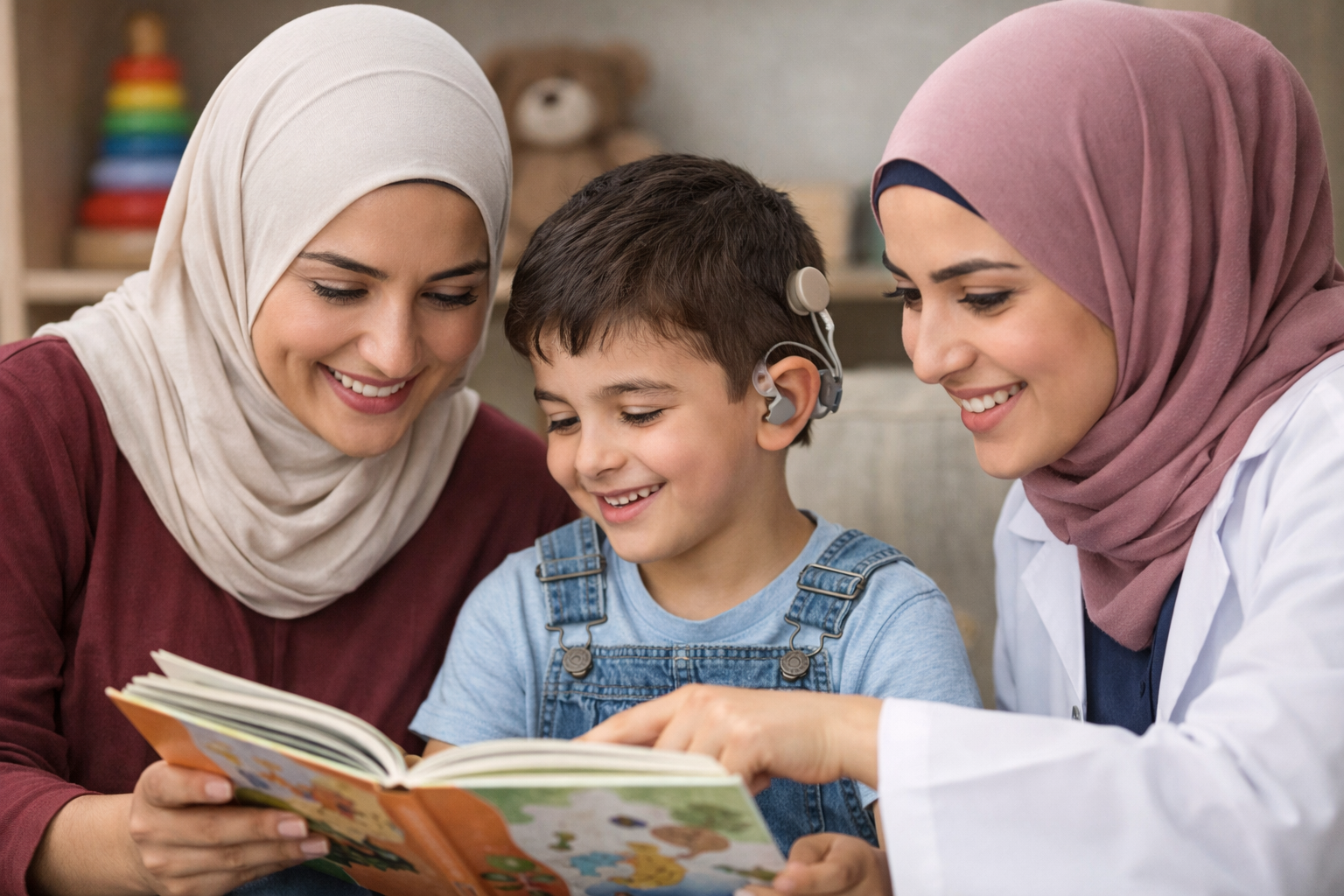
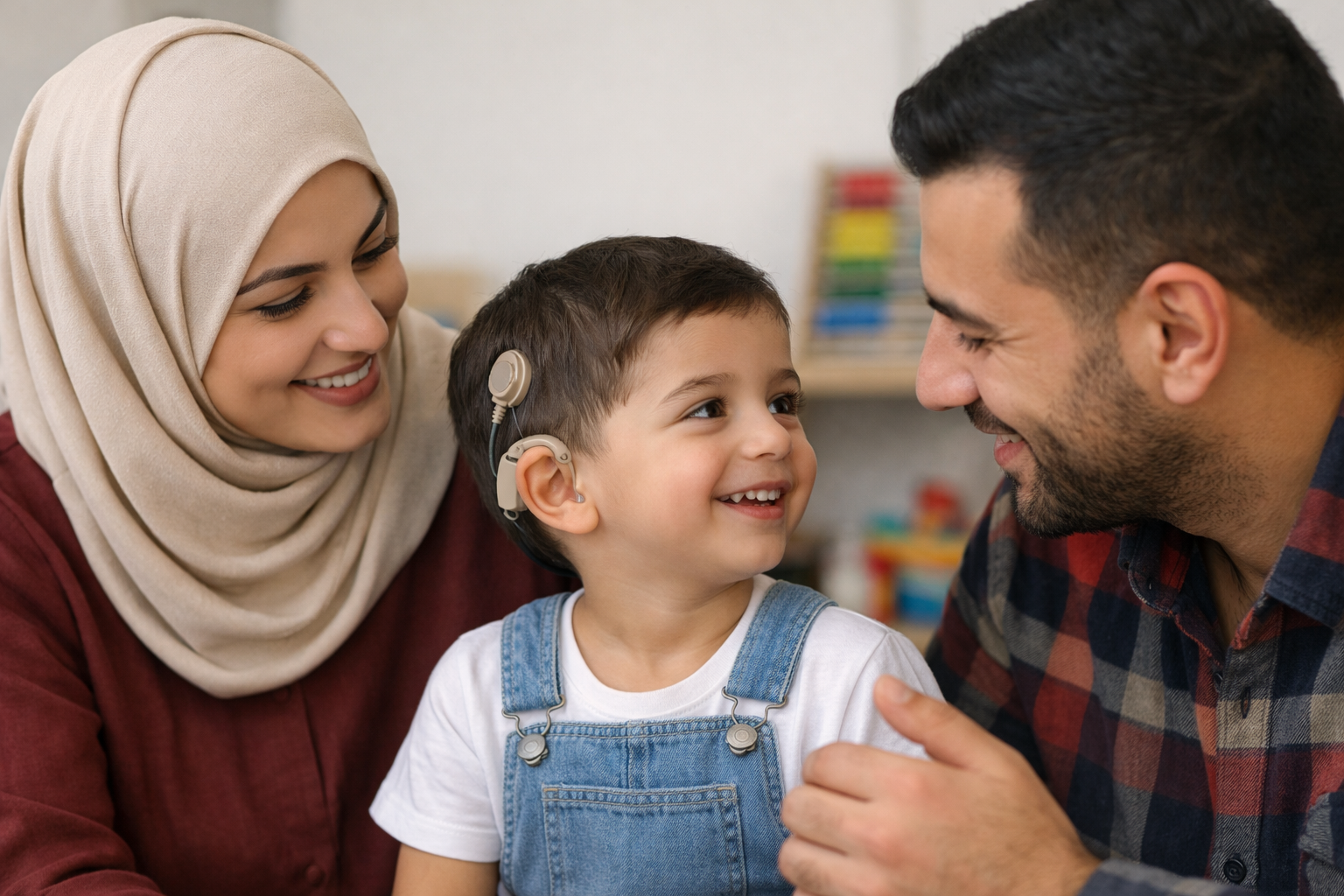
Story reading is often considered a recreational or supplementary activity in a child’s daily routine. However, for children with hearing loss and those using cochlear implants, story reading should be a core part of daily life. It is not merely entertainment; it is a powerful therapeutic and educational tool with a direct impact on spoken language development, expressive fluency, and school readiness.
Scientific evidence shows that consistent exposure to rich spoken language through stories helps reduce the language gap often observed between children with hearing loss and their hearing peers. When stories are read regularly and interactively, they become a cornerstone of effective language intervention.
Story Reading as a Rich and Meaningful Language Input
Stories provide a natural linguistic environment filled with vocabulary, grammatical structures, and varied sentence patterns. Children with hearing loss or cochlear implants need to hear language in meaningful contexts rather than as isolated words or drills.
Through storytelling, words are presented within a clear narrative context and are often supported by visual cues such as pictures. This combination helps improve comprehension, auditory memory, and language retention. Research in listening and spoken language development confirms that regular interactive story reading enhances both receptive and expressive language skills, especially when parents are actively involved in daily reading routines.
Improving Spoken Language Fluency and Spontaneous Speech
Repeated listening to stories exposes children to accurate language models in terms of rhythm, sequencing, and logical flow. Over time, this repeated exposure helps the brain organize auditory input more efficiently, leading to the production of longer, clearer, and more connected spoken sentences.
Activities such as retelling the story, answering open-ended questions, and discussing events in sequence strengthen narrative skills and temporal organization. These abilities are key indicators of spoken language fluency and spontaneous speech development.
The Role of Story Reading in School Readiness
Story reading plays a crucial role in preparing children for academic success. Children who are read to consistently demonstrate a stronger understanding of story structure, including beginnings, endings, sequencing, and cause-and-effect relationships.
These foundational skills are directly linked to reading comprehension, written expression, and classroom learning. In addition, storytelling supports essential cognitive skills such as attention, shared listening, and short-term auditory memory, which can be particularly challenging for children with hearing loss if not developed early.
The Importance of Interactive Story Reading
The value of story reading does not lie solely in reading the text aloud, but in how the story is shared. Interactive reading is essential and includes pausing to ask questions, repeating key phrases, expanding on the child’s responses, and linking the story to the child’s real-life experiences.
Consistency is equally important. Reading daily for just 10–15 minutes can lead to meaningful improvements in listening skills, spoken language development, and long-term communication outcomes.
Conclusion
For children with hearing loss and cochlear implants, story reading is not optional—it is essential. It supports spoken language development, improves fluency, strengthens cognitive skills, and lays a strong foundation for academic success.
At Qaqqaa Cochlear Speech and Hearing Center, we encourage families to make story reading a daily, interactive habit, transforming everyday moments into powerful opportunities for listening, learning, and communication growth.